
Top Educational Games For 8 Year Olds Leveling Up Learning In 2026
--- title: "Top Educational Games for 8-Year-Olds: Leveling Up Learning in 2026" slug: "top-educational-games-for-8-year-olds-leveling-up-learning-in-2026" desc
title: "Top Educational Games for 8-Year-Olds: Leveling Up Learning in 2026" slug: "top-educational-games-for-8-year-olds-leveling-up-learning-in-2026" description: "Find the best educational games for 8 year olds to transform screen time. Our 2026 guide covers top math, coding, and literacy apps for 3rd graders." excerpt: "What if the 4 hours and 44 minutes your child spends on a screen every day became their most productive study session of the week? According to 2025 data from Common Sense Media, t" publishedAt: "2026-05-15T10:00:00.000Z" author: "LearnVerzo Team" categories:
- "Blog" coverImage: "https://getautoseo.com/storage/hero_images/article_1357717_1778781557.jpg" draft: false
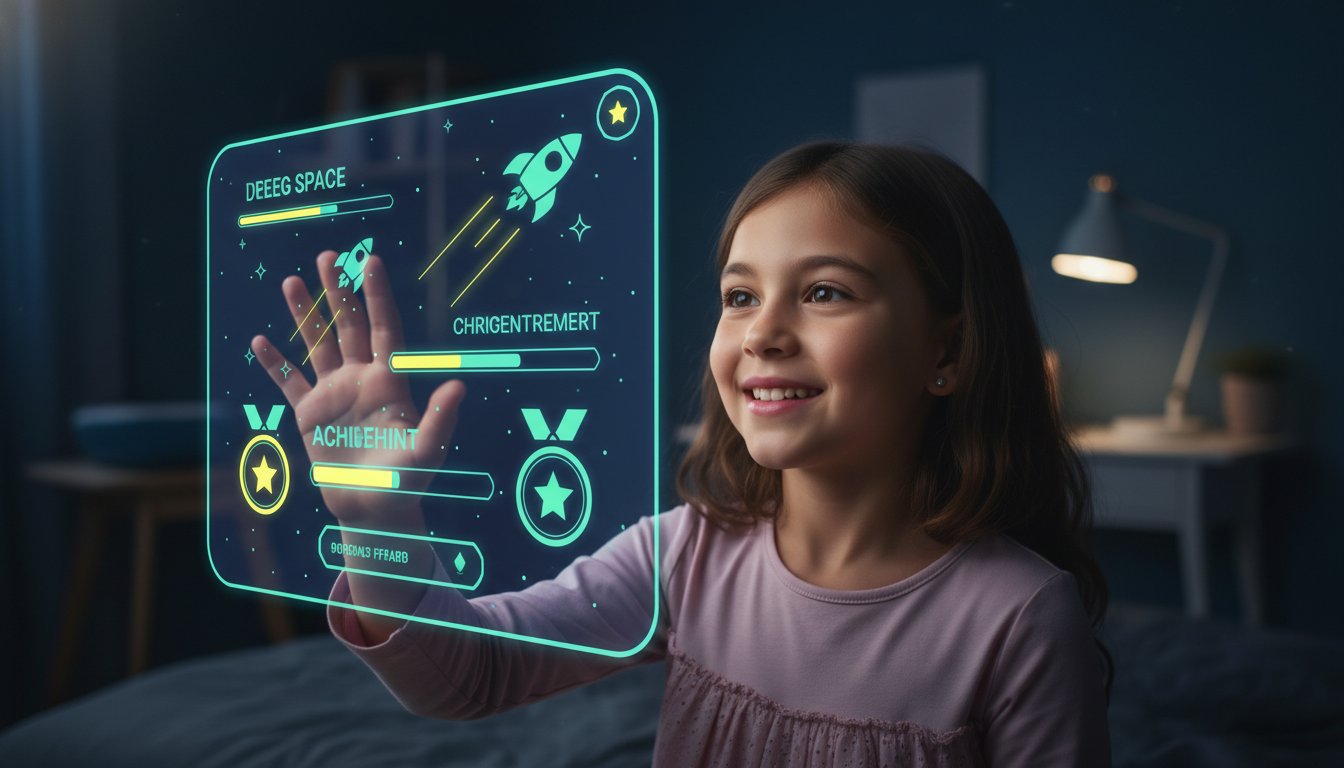
What if the 4 hours and 44 minutes your child spends on a screen every day became their most productive study session of the week? According to 2025 data from Common Sense Media, that's the average time 8 to 12-year-olds spend on digital entertainment. It's time to stop fighting the device and start fueling the mind. You're likely exhausted by the "empty" screen time guilt and the struggle to keep a 3rd-grader focused on traditional homework. You need educational games for 8 year olds that don't feel like "baby" apps, but rather sophisticated environments where high-stakes play meets curriculum-aligned mastery.
We believe learning shouldn't be a chore to finish. It should be an expansive world to conquer. This guide discovers the tools that transform math and coding into high-energy adventures. You'll replace frustration with the dopamine-driven satisfaction of incremental progression. We'll preview the top platforms of 2026, including LearnVerzo Math and LearnVerzo Coding, ensuring your student levels up their skills through a seamless blend of play and study. From the strategic discipline of chess to AI-driven progress tracking, get ready to turn 3rd-grade challenges into your child's next favorite quest.
Key Takeaways
-
Identify the cognitive "8-year-old shift" where abstract reasoning begins and academic confidence becomes a critical competitive advantage.
-
Master the four pillars of effective gamification—XP, rewards, narrative, and feedback—to transform passive screen time into active skill acquisition.
-
Navigate the most effective educational games for 8 year olds by comparing high-stakes coding simulators with immersive, narrative-driven literacy adventures.
-
Implement the "70/30 Rule" to balance digital exploration with targeted physical reinforcement using printable practice worksheets.
-
Discover how a unified learning arena empowers students to view complex subjects like math and coding as expansive environments to be mastered.
Table of Contents
Why Age 8 is the Strategic Peak for Educational Games
The 8-year-old shift is a cognitive revolution. Your child is moving away from basic memorization toward complex, abstract reasoning. This development makes it the strategic peak for introducing educational games for 8 year olds. In 3rd grade, students face a critical academic juncture. They transition from "learning to read" to "reading to learn." Math moves from simple addition into the high-stakes world of multiplication, division, and fractions. If a student loses confidence during this transition, the achievement gap can widen quickly. High-energy digital environments prevent this by turning intimidating curriculum standards into achievable milestones.
We need to change the narrative from "playing to learn" to "mastering through play." At age 8, agency is the ultimate motivator. Children at this stage crave the ability to make choices, customize their experience, and dictate their own pace. When a student enters an arena like LearnVerzo Math or LearnVerzo Coding, they aren't just following a lesson plan. They are exploring an expansive environment where they have the power to succeed. This sense of ownership transforms a math problem from a chore into a challenge to be conquered.
The Cognitive Leap: From Concrete to Strategic
Eight-year-olds are suddenly capable of handling multi-step problems and complex rule sets. They stop asking "what" and start asking "how" and "why." This is where healthy competition enters the learning process. Digital platforms allow them to test their skills against challenges that scale with their evolving ability. This builds a robust growth mindset. They learn that failure is just a data point, not a final grade. Strategic play is the bridge between curiosity and mastery.
Why Traditional Homework Fails Where Games Succeed
Traditional paper tasks rely on delayed gratification. A child completes a worksheet and waits 24 hours for feedback. By then, the learning moment has passed. Digital environments solve this through immediate error correction. If a line of logic fails in LearnVerzo Coding, the student sees the result instantly. This creates the "Mastery Loop" which consists of a clear challenge, a focused attempt, immediate feedback, and the eventual success of leveling up.
Understanding What are educational games? helps parents see these tools as structured pedagogical systems rather than simple distractions. These platforms maintain a high flow state that traditional homework cannot match. The dopamine-driven feedback of a game ensures that an 8-year-old stays engaged with a difficult concept until they achieve total proficiency. It replaces the frustration of "getting it wrong" with the exhilaration of "solving the puzzle."
The Anatomy of a High-Impact Educational Game
Why do some platforms collect digital dust while others become a daily obsession? The difference lies in high-stakes engagement. A high-impact game isn't just a digital worksheet. It's a carefully engineered ecosystem built on four pillars: Experience Points (XP), Rewards, Narrative, and Feedback. These elements transform educational games for 8 year olds from passive screen time into a competitive arena for mastery. When a student earns XP for solving a multiplication set, they aren't just "doing math." They are building their status and unlocking new potential.
"Leveling Up" is the ultimate metaphor for academic growth. It shifts the focus from finality to progression. In traditional settings, a poor grade feels like a permanent mark. In a game, a failed level is just a prompt to try a new strategy. This resilience is vital for 3rd graders facing the leap toward abstract logic. We replace the fear of failure with the thrill of the quest, turning every challenge into a step toward elite status.
Safety is the foundation of this digital arena. For elementary students, an ad-free environment is essential to maintain focus and protect privacy. High-quality platforms prioritize regulatory compliance and achievement-based outcomes. This ensures that the only thing your child discovers is their own potential. You want a space that is fundamentally protective yet highly competitive.
Gamification Mechanics That Drive Retention
Experience Points (XP) turn repetitive practice into a quest for status. Every correct answer contributes to a larger goal, making even the smallest wins feel significant. Leaderboards amplify this effect. They create a global, interconnected learning arena where students compete for recognition. These mechanics ensure that high-impact educational games for 8 year olds feel like a rewarding journey. Unlockable rewards, such as new abilities or digital collectibles, provide the satisfaction needed to keep students returning to master difficult subjects like English or Coding.
The Role of AI in Real-Time Learning
Static games are a thing of the past. Modern platforms use adaptive difficulty that evolves with the child's progress. This prevents the frustration of "baby" games while keeping challenges within reach. An AI tutor for primary school students provides instant intervention when a student hits a roadblock. Instead of waiting for a teacher to grade a paper, the AI identifies the error in real-time. This reduces the "fear of being wrong" in high-pressure subjects like Math. It allows the student to adjust their strategy immediately, maintaining the momentum of the mastery loop.
Ready to see this in action? Explore the LearnVerzo arena to discover how these pillars build elite students.

Top Categories: Math, English, and Coding Games
Static logic puzzles have their place, but digital simulators offer a scalability that traditional tools lack. Eight-year-olds need environments that react to their decisions. While a physical puzzle might be solved once, a digital coding simulator offers infinite permutations. This evolution is essential for educational games for 8 year olds. It moves beyond rote memorization into the territory of strategic application. You aren't just looking for a game that occupies time. You want an arena that builds specific, measurable skills in core subjects.
Success in 2026 requires a hybrid approach. We combine the fast-paced nature of digital play with the rigor of 3rd-grade standards. Use this checklist to evaluate the curriculum alignment of any platform you consider:
-
Standard Mapping: Does the content align with Common Core or national 3rd-grade benchmarks?
-
Data Insights: Is there a dashboard that tracks specific skill mastery rather than just "time spent"?
-
Adaptive Engine: Does the difficulty scale automatically based on the student's performance?
-
Narrative Depth: Is the educational content integrated into the story, or is it just a "wrapper" for a basic quiz?
Math Mastery: Beyond Basic Arithmetic
Third grade is where math gets serious. Students must master multiplication, division, and the intimidating world of fractions. Modern gamified math for kids turns these hurdles into adventure-based quests. Look for games that use spatial reasoning to prepare students for geometry. High-impact platforms even include "boss battles." These are unit assessments framed as final challenges, ensuring the student has truly mastered the concept before moving to the next stage.
Coding and Logic: The New Literacy
Computational thinking is no longer optional. It is the new literacy. Utilizing online coding games for elementary students helps 8-year-olds understand logic, sequences, and debugging. Block-based environments allow them to build complex programs without the frustration of syntax errors. Many top-tier games now feature a "Creator Economy." This allows kids to design their own levels, shifting them from passive consumers to active architects of their own digital worlds.
English and Literacy: Narrative-Driven Quests
Engaging English learning has evolved far beyond simple spelling bees. We now use RPG mechanics to teach reading comprehension and grammar. Interactive storytelling ensures that vocabulary acquisition happens naturally within a compelling plot. Engaging english learning platforms often utilize voice-recognition technology. This provides immediate feedback on pronunciation and fluency, allowing students to practice speaking in a low-pressure environment. It turns a grammar lesson into a mission where every word matters.
The Hybrid Approach: Balancing Screen Time and Physical Practice
Mastery isn't confined to a screen. While digital platforms provide the adrenaline, physical practice provides the anchor. We recommend the 70/30 Rule. Spend 70% of study time in high-energy digital environments and 30% on focused physical reinforcement. This balance is critical when selecting educational games for 8 year olds. It prevents digital fatigue while ensuring that abstract concepts become concrete skills. When a child succeeds in a digital arena, they gain the confidence to tackle traditional tasks without the usual pushback.
Tactile experience plays a massive role in solidifying knowledge. Moving from a digital coding simulator to a physical logic puzzle engages different neural pathways. It turns a concept into a lived experience. This hybrid model also addresses parental concerns about eye strain and sedentary behavior. Integrate "active breaks" into the routine. Encourage five minutes of physical movement between game levels to keep energy high and focus sharp. Play hard. Study harder. It’s about creating a sustainable rhythm that respects the child's biology.
Reinforcing Digital Wins with Physical Worksheets
Think of printable practice worksheets as the "final boss" of a digital lesson. After mastering a concept in the LearnVerzo arena, a physical worksheet proves the skill is portable. Handwriting offers a specific cognitive benefit for 8-year-olds that typing cannot replicate. It improves memory retention and fine motor control. Establish a clear routine. Set a timer for 20 minutes of digital play. Follow it immediately with one focused practice sheet. This transition helps students realize that their digital powers apply to the real world too.
Classroom Integration for Educators
Teachers can leverage this hybrid approach to scale student success. In a classroom setting, the Station Rotation model works best. Use educational games for 8 year olds as one of the active hubs. While one group works with the teacher, another explores a coding mission or a math quest. The Teacher Dashboard provides real-time data to identify learning gaps before they become obstacles. For schools looking to implement this across multiple grades, exploring institutional licensing ensures every student has access to these elite tools. It creates a unified environment where play and study are perfectly synchronized.
Ready to bridge the gap between play and paper? Get started with the LearnVerzo Hybrid Model today.
LearnVerzo: The Ultimate Arena for 8-Year-Old Mastery
LearnVerzo isn't just another app. It's a high-stakes digital environment where 3rd-grade standards become legendary quests. While many educational games for 8 year olds focus on simple trivia or basic repetition, we provide a unified ecosystem designed for elite performance. Math, English, and Coding are no longer separate chores. They are interconnected disciplines within a single arena. This is where personal evolution meets academic precision. We've built a space that respects the intelligence of an 8-year-old while providing the structure required for 2026 academic standards.
The competitive edge is a core part of our philosophy. Global leaderboards and elite status rewards turn study sessions into exhilarating social competition. Students don't just solve problems; they climb the ranks and earn their place among the best. Our "Safe Arena" philosophy ensures zero ads and zero distractions. We prioritize regulatory compliance and achievement-based outcomes so parents can focus on progress. With the AI Learning Assistant providing instant intervention, the path to mastery is always clear and accessible.
-
Unified Curriculum: Seamlessly switch between Math, English, and Coding without leaving the arena.
-
Elite Status: Earn rewards and XP that reflect genuine academic growth and strategic thinking.
-
Zero Distractions: A fundamentally protective environment designed for deep focus and safety.
-
Global Arena: Compare skills with students worldwide through secure, high-energy leaderboards.
The Mastery Ecosystem
The LearnVerzo platform delivers a vibrant experience that mirrors the digital culture your child already loves. It bridges the gap between high-stakes entertainment and rigorous education. The Teacher Dashboard and parent portal provide real-time analytics, showing exactly where a student excels or needs reinforcement. It's data-driven insight wrapped in a high-octane interface. This environment ensures that the dopamine-driven satisfaction of progression is always tied to a concrete learning objective.
Start Your Quest Today
Experience the Mastery Loop firsthand. Explore our free trial to see how quickly your child engages with complex logic and advanced problem-solving. We offer flexible options for every seeker of knowledge, including individual memberships and institutional plans for school-wide deployment. Join a global community of students who view learning as their greatest adventure. Stop settling for "empty" screen time. Level up your child's education and watch them conquer the 3rd-grade curriculum with confidence. Launch your mastery quest at LearnVerzo today.
Master the Arena of 3rd-Grade Learning
The transition to 3rd-grade logic is a high-stakes mission. You now have the strategic blueprint to select educational games for 8 year olds that actually deliver results. Remember to balance digital missions with physical reinforcement. Prioritize platforms that replace the fear of failure with the thrill of the quest. Your child's screen time is no longer a source of guilt. It's their most powerful environment for growth.
LearnVerzo provides the ultimate arena for this academic evolution. Our system features AI-driven real-time support to guide every step. We offer curriculum-aligned Math, English, and Coding modules built for 2026 standards. This is why schools globally utilize our platform for institutional mastery. Stop settling for passive entertainment. Give your student the competitive advantage of elite status. Every challenge is an opportunity to improve.
Level up your child's learning with a LearnVerzo subscription today! The quest for knowledge is waiting. Your child has the potential to conquer it all. Start the journey now and watch them reach their peak.
Frequently Asked Questions
Are educational games effective for 8-year-olds?
Educational games for 8 year olds are highly effective because they align with the cognitive shift toward strategic thinking. These platforms replace passive memorization with active problem-solving. By providing immediate feedback, they ensure students stay in a flow state. This builds a robust growth mindset where failure is seen as a necessary step toward mastery. It transforms 3rd-grade challenges into exhilarating digital quests.
How much screen time should an 8-year-old have for learning?
Current 2026 guidelines from the American Academy of Pediatrics emphasize content quality over strict time limits. We recommend a balanced approach using the 70/30 rule. Dedicate focused sessions to digital learning while reinforcing concepts with physical worksheets. This ensures that screen time remains productive and doesn't displace physical activity or sleep. Always prioritize high-energy, curriculum-aligned environments that challenge the mind.
Can games help with 3rd-grade math anxiety?
Digital environments are powerful tools for neutralizing math anxiety in 3rd graders. They use the "Mastery Loop" to provide a safe space for trial and error. When a student receives instant intervention from an AI Learning Assistant, the frustration of being "stuck" disappears. Math becomes a series of conquerable boss battles rather than an intimidating chore. This builds the confidence needed for high-stakes academic success.
What makes a game 'educational' versus just 'fun'?
A truly educational game must bridge the gap between high-stakes entertainment and pedagogical precision. Look for curriculum-aligned content that maps to 3rd-grade standards like multiplication and fractions. Unlike "empty" entertainment, these platforms offer data-driven insights and adaptive difficulty. They focus on active, critical thinking rather than rote memorization. The goal is to turn a mere participant into a dedicated seeker of knowledge.
Is LearnVerzo safe for children to use independently?
LearnVerzo is built on a "Safe Arena" philosophy designed for independent exploration. It is a fundamentally protective environment with no ads, no external distractions, and full regulatory compliance. Students can navigate their learning quests with total autonomy while parents maintain oversight through real-time analytics. This allows 8-year-olds to build digital agency in a space that is both exhilarating and secure.
How do I track my child's progress in an educational game?
You can monitor every win and roadblock through a dedicated Teacher or Parent Dashboard. These portals provide real-time analytics that go beyond simple "time spent." You'll see exactly which curriculum standards your child has mastered and where they need more practice. This data-driven approach allows for targeted intervention. It ensures that every session contributes to the child's incremental progression toward elite academic status.
Can these games be used in a classroom setting?
These platforms are ideal for classroom integration through the Station Rotation model. Teachers use educational games for 8 year olds as active learning hubs while they focus on small-group instruction. Institutional licensing allows schools to scale this success across entire districts. The real-time data from dashboards helps educators identify learning gaps instantly. It creates a global, interconnected arena where students compete and grow together.
Do educational games replace traditional tutoring?
While these tools don't replace the need for mentorship, they provide a level of immediate, 24/7 intervention that traditional methods lack. They act as a high-tech force multiplier for learning. The AI Learning Assistant offers instant feedback during every attempt, maintaining the momentum of the mastery loop. When combined with printable practice worksheets, these games provide a comprehensive ecosystem for student evolution and academic dominance.